
Published November 17, 2025
How to Decode Denver's School Zones: What Homebuyers Need to Know About Boundaries, Ratings, and Real Value


If you're house hunting in Denver, here's a reality check: ignoring school zones could cost you thousands: or even prevent you from getting the financing you need. With 37% of homebuyers aged 34-43 considering school district quality a top factor when choosing neighborhoods, and homes in high-performing districts selling for 49% more than the national median, understanding Denver's school landscape isn't just about education: it's about protecting your investment.
Let me walk you through everything you need to know about navigating Denver's unique school system, from deciphering boundary maps to understanding how ratings translate into real dollars.
Denver's Two-Zone System: It's More Complex Than You Think
Unlike many cities with straightforward school boundaries, Denver operates a hybrid system that can catch unsuspecting buyers off guard. Traditional boundaries work exactly how you'd expect: your address determines one specific school your child will attend. But Denver also uses enrollment zones, which guarantee your child a seat at one of several schools within a geographic area rather than assigning them to just one.
This enrollment zone system gives families more flexibility in school choice, but it also means you can't simply assume the closest school is where your child will go. A house might be two blocks from an excellent elementary school, but if you're in an enrollment zone, your child might end up at a different school entirely: or you might have multiple good options to choose from.
"Denver's boundaries are dynamic and may change over time to address overcrowding and plan for future growth," notes the district's planning department. This means today's school assignment could shift in the future, which is something to factor into your long-term planning.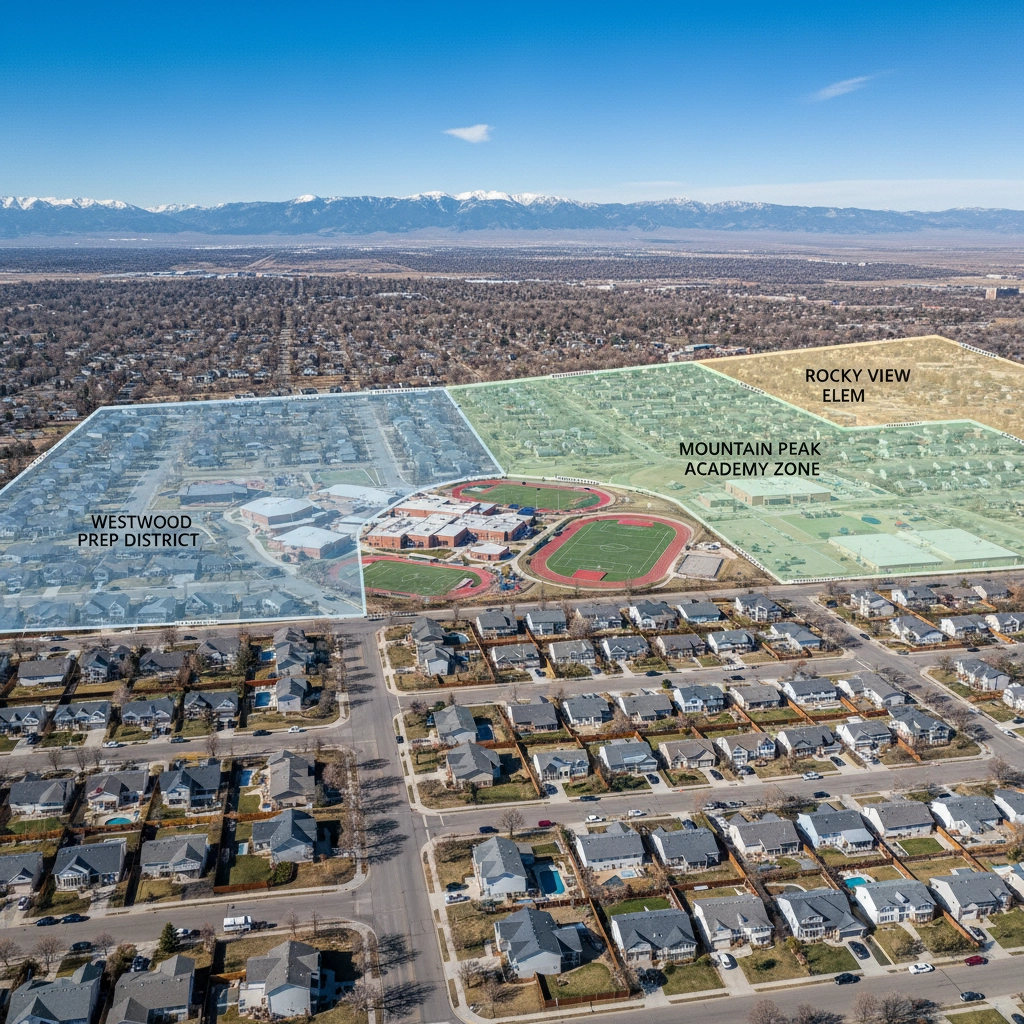
The Real Numbers: How School Quality Impacts Your Investment
Here's where things get interesting from a financial perspective. The data doesn't lie: school district quality has a massive impact on property values, and the numbers are more dramatic than most people realize.
Homes in high-ranked school districts cost 77% more than those in low-ranked districts. That's not a typo. If you're looking at a $400,000 home in a lower-rated district, the same quality house in a top-performing district might run you over $700,000.
But here's what's really important to understand: proximity isn't everything. You might find a beautiful home just three blocks from a highly-rated school, thinking you're getting a steal. But if that address falls outside the school's boundary, you won't get the premium education or the property value boost that comes with it.
The value impact works in several ways:
Performance metrics drive demand. Test scores, graduation rates, and community reviews establish a school's reputation, which directly affects how many families want to live in that area. More demand equals higher prices.
Walkable access commands premium pricing. Homes within easy walking distance of top-rated schools typically cost more than properties on the district's outskirts. Parents value convenient access to school activities and shorter commute times.
Future investment potential matters. School districts investing in improvements or showing upward trends can positively influence property values over time, while declining districts may drag down your home's appreciation.
Denver's School District Landscape: Know Your Options
Understanding which districts serve different areas of metro Denver helps you focus your home search more effectively.
Denver Public Schools (DPS) is the largest district, serving much of the city proper. While DPS gets mixed reviews overall, several individual schools within the district are consistently recognized for academic excellence and innovative programs. The key with DPS is researching specific schools rather than judging the entire district.
Cherry Creek School District operates in the southeastern suburbs and frequently ranks among the state's top performers. Their schools are known for strong academic standards, comprehensive programs, and high college preparation rates. Homes in Cherry Creek boundaries typically command significant premiums.
Jeffco Public Schools serves western Denver suburbs and maintains a solid reputation for academic performance and community involvement. The district offers a range of quality programs and tends to be more affordable than some of the highest-performing districts while still delivering strong educational outcomes.
Several smaller suburban districts also deserve consideration, including Douglas County, Adams 12 Five Star Schools, and Boulder Valley, each with their own strengths and characteristics.
What Lenders and Appraisers Really Think About School Zones
Here's something many buyers don't realize: lenders and appraisers factor school quality into property valuations, which can significantly impact your financing.
In competitive school districts, this generally works in your favor. Appraisers recognize that homes in high-performing school zones maintain their value better and have stronger resale potential, supporting higher appraised values and making financing smoother.
However, if market demand has pushed prices beyond what appraisers consider justified by the fundamentals, you might face challenges. Your lender might require a larger down payment, or you might need to negotiate with sellers if the appraisal comes in low.
The Hidden Restrictions: What School Zones Really Mean
Living in a school zone isn't just about education access: it comes with specific regulations that can affect how you use your property.
Many school zone areas have stricter requirements than typical residential properties, including enhanced upkeep standards, specific traffic and parking rules during school hours, noise restrictions during certain times, and potential limitations on short-term rentals.
Some zones also restrict certain types of home-based businesses or require additional permits for security systems and fencing. Before you buy, make sure you understand and can live with these restrictions.
Your Research Toolkit: Verifying School Information
Don't rely on proximity or assumptions when evaluating school assignments. Here are the tools you need to get accurate information:
The DPS SchoolChoice website offers digitally-accessible boundary maps and school assignment tools. You can enter any address to see exactly which schools serve that location.
GreatSchools.org provides comprehensive district boundary maps and allows you to compare schools by test scores, reviews, and demographics. Their data includes both district-wide and individual school performance metrics.
The Colorado Department of Education's SchoolView tool shows how school districts throughout the state compare, giving you broader context for Denver-area options.
Local district websites maintain the most up-to-date boundary information. Adams 12, Cherry Creek, Jeffco, and other suburban districts each provide detailed maps and information about choice enrollment options.
For the most reliable verification, call the school district directly. Denver Public Schools operates a School Boundary Hotline at 720-423-3400 specifically for address verification.
Making Smart Decisions in Today's Market
In Denver's current real estate environment, school district considerations become even more critical. With inventory changes and shifting market conditions, homes in desirable school districts often see sustained demand even when other areas cool down.
Consider your timeline carefully. If you're planning to start a family in a few years, buying in a good school district now could save you from having to move later: and potentially facing even higher prices.
Remember that school quality can change over time. Research trends in test scores, recent administrative changes, and community investment in education. A district that's improving might offer better long-term value than one that's declining, even if current ratings favor the latter.
The Bottom Line
Navigating Denver's school zones requires more research than simply finding the closest highly-rated school to a potential home. Understanding enrollment zones, verifying exact boundaries, and factoring in the financial implications will help you make informed decisions that align with both your family's educational goals and your financial objectives.
Before you make an offer on any Denver-area home, take the time to verify school assignments through official district channels. The few hours you spend researching now could save you thousands of dollars and years of frustration down the road.
Whether you're prioritizing top academic performance, convenient access, or long-term investment potential, understanding how Denver's school system works gives you the knowledge you need to find the right home in the right district for your family's future.


